
Nature Informed Therapy
Research & Study
Explore the rigorous research and scientific studies that substantiate the effectiveness of Nature Informed Therapy (NIT). This page presents a collection of research, beginning with our seminal study on the therapy's impact in substance use disorder treatment and expanding to include various other contexts and benefits.

Research that builds standards
-
What we study: What makes nature-based work therapeutic, transferable, and ethical.
-
What we measure: Outcomes + mechanisms of change (so training improves and stays accountable).
-
How it’s used: Directly informs CNIT training standards, tools, and program design.
What we mean by evidence
Current research priorities
-
Mechanisms of change: what makes nature-based care therapeutic
-
Measurement tools: improving how we track change
-
Scalable delivery: brief, park-based programs + indoor/online adaptations
Our Research Partners

University of Maryland

University of Utah

University of Starvanger
Norway

State University of New York, Plattsburch
PROGRAM EVALUATION - PRELIMINARY FINDINGS
Measuring outcomes across CNIT programs
Using our Nature-Informed Biopsychosocial-Spiritual Model Assessment (NIBSMA), we collected pre- and post-program data across multiple CNIT programs in 2024–2025, including wilderness backpacking experiences, professional training intensives, and nature-based retreats.
195
pre-program assessments
147
post-program assessments
103
matched pre/post pairs
92%
of participants showed reduced body-based stress and anxiety
89%
of participants showed improvement in overall
well-being
0%
of participants moved from moderate/high well-being to low
Psychometric quality
.80
Anxiety/Stress
.74
Cognitive
.88
Social
.89
Spiritual
.86
Nature Relatedness*
All five NIBSMA subscales demonstrated acceptable to good internal consistency (Cronbach's alpha range: .74 – .89), supporting the instrument's reliability even in this preliminary version. The Nature Relatedness component incorporates the validated NR-6 scale (Nisbet, Zelenski, & Murphy, 2009).
A note on these findings
We share these preliminary results with transparency about both their promise and their limitations. This Phase 1 data was collected as part of ongoing program evaluation rather than a controlled research study. The findings reflect real improvements reported by real participants, but because there was no control group, we cannot yet attribute these changes solely to the nature-informed component of our programs.
We believe this honesty strengthens rather than weakens our work. Many programs in the wellness space make bold claims without measurement. We chose to measure from the start, even before our tools were perfected, because we believe clinicians and participants deserve evidence, not just enthusiasm.
WHAT'S NEXT - PHASE 2
University partnerships and NIBSMA 2.0
CNIT is currently collaborating with researchers at the University of Utah and the University of Maryland to refine and validate the NIBSMA. This partnership will produce a psychometrically validated assessment through expert review, item testing, and factor analysis.
Once finalized, NIBSMA 2.0 will be made freely available to all nature-informed clinicians. Giving practitioners everywhere a standardized, evidence-based tool to measure the impact of their work.
Featured Study
Brief ecotherapy programs can support both regulation (calmer attention) and meaning/connection (awe, belonging).
Understanding What Makes a Brief Ecotherapy Program Therapeutic: A Qualitative Analysis of Anthropocentric and Ecocentric Factors
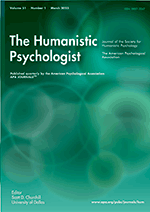
The Humanistic Psychologist (APA) · DOI: 10.1037/hum0000402
Author: Deal, P. J., Delaney, M. E., Sacco, E. G., & Schreiber-Pan, H.
Study Summary
This peer-reviewed qualitative study examined participant experiences in a 6-week, 90-minute-per-week ecotherapy program delivered by licensed clinicians in a suburban park setting. The program blended mindfulness/relaxation, ACT, forest bathing, guided group processes, and ecopsychology-based psychoeducation. Five consistent outcomes emerged from consensual qualitative analysis: stress reduction, being present, shift in perspective, deepened relationship with nature, and transcendence/awe.
Together, these point to a dual pathway of benefit: nature supports regulation (calmer, less reactive, more grounded attention) while also fostering meaning and connection (awe, belonging, reciprocity). These findings help explain how ecotherapy heals and why brief, park-based programs can scale accessibility in communities.
Key Findings
-
Participants reported less reactivity and more calm/grounding; being outside became a go-to strategy for stress and anxiety.
-
Nature reliably pulled attention into the present through sensory engagement, supporting mindful awareness.
-
Experiences of awe/transcendence and stronger relationship with nature appeared as common, healing factors.
Program studied
CNIT"s "Nature Therapy for Wellness" ecotherapy series in a large suburban park, integrating Level-1 (regulation) and Level-2 (ecocentric/meaning) practices.
(for personal, non-commercial use)
NIT Related Researches
Understanding What Makes a Brief Ecotherapy Program Therapeutic:
Deal, P. and more
This peer-reviewed qualitative study examined participant experiences in CNIT's 6-week, 90-minute-per-week ecotherapy program (Nature Therapy for Wellness) delivered by licensed clinicians in a suburban park setting. The program blended mindfulness/relaxation, ACT, forest bathing, guided group processes, and ecopsychology-based psychoeducation. Five consistent outcomes emerged from consensual qualitative analysis: stress reduction, being present, shift in perspective, deepened relationship with nature, and transcendence/awe. Together, these point to a dual pathway of benefit: nature supports regulation (calmer, less reactive, more grounded attention) while also fostering meaning and connection (awe, belonging, reciprocity). These findings help explain how ecotherapy heals and why brief, park-based programs can scale accessibly in communities.
Nature Informed Therapy Evaluation Report

Jessica Hunt
Substance use disorders (SUDs) are associated with impaired functioning creating a significant burden for the affected individuals, families, and communities (Daley, 2013). Despite the high prevalence rates as well as impact on functioning, only about 10 percent of people with a SUD will receive specialized treatment (Surgeon General’s Report, n.d.). This makes it essential for those who do seek and receive treatment to be offered holistic care that integrates evidence-based interventions to improve treatment outcomes. According to existing research, NIT potentially intervenes at multiple levels of contributing factors for SUDs by restoring a healthy relationship with nature, self, and others as well as decreasing risk for psychological disorders leading to improvements in mental health and well-being(CNIT, n.d).
Under the Weather? Go into the Wild
Lydia Asisten
Lydia Asisten analyzed pre‑ and post‑program NIBSMA surveys from CNIT participants and found consistent, across‑the‑board improvements. Average scores rose in all five domains—stress dropped while cognitive clarity, social connection, spiritual well‑being, and nature relatedness increased—producing a single, high‑well‑being cluster after the program. Qualitative comments echoed these gains, indicating that CNIT’s nature‑based interventions reliably boost overall mental health and strengthen people’s bond with nature.
A Multidisciplinary Perspective on Adult Play and Playfulness

René T. Proyer
This editorial introduces a special issue of the International Journal of Play, offering multidisciplinary perspectives on adult play and playfulness. It highlights eight original contributions and two comments, exploring topics such as the evolutionary benefits of playfulness, cultural transmission of play, playful learning in higher education, and the impact of play on creativity and urban design. The issue also addresses the role of play in psychiatry and conceptualizes BDSM as a form of adult play. The aim is to stimulate further research into the diverse applications and benefits of playfulness in adult life.
The Importance of Outdoor Play and Its Impact on Brain Development in Children

Edgar L. and more
This report, developed by UMKC's RN-BSN students in collaboration with the Berkley Child and Family Development Center, highlights the crucial role of outdoor play in children's brain development. It discusses the cognitive, physical, social, and emotional benefits of outdoor activities for children from infancy through school age. Emphasizing experiential learning, the report provides practical ideas for incorporating outdoor play at home and underscores the importance of recess in schools. It also addresses barriers to outdoor play and advocates for more opportunities for children to engage in unstructured, outdoor activities.
Well-Being with Nature in Mind
Heidi Schreiber-Pan
This dissertation investigates the relationship between connectedness to nature, spirituality, and psychological well-being. Utilizing the Connectedness to Nature Scale (CNS) and Nature Relatedness Scale (NRS), the study measures individuals' connection to nature and its impact on well-being, assessed through the Connor-Davidson Resiliency Scale (CD-RISC) and the Scales of Psychological Well-Being (SPWB). Findings indicate a significant correlation between nature connectedness and well-being, with spirituality playing a mediating role. The study underscores the mental health benefits of a strong nature connection and highlights the importance of spirituality in enhancing psychological resilience and well-being. Implications for integrating nature into therapeutic practices are discussed, offering valuable insights for clinicians and counseling educators.
Into the Wild

Sam J. Cooley and more
This meta-synthesis examines the practice of talking therapy in natural outdoor spaces, synthesizing insights from 38 articles with 322 practitioners and 163 clients. It highlights the benefits of nature, such as reduced stress and improved mood, and proposes a framework for best practices. Key themes include individualized client assessment, the therapeutic advantages of mutuality and freedom, and the importance of risk management and informed consent. The study emphasizes the enrichment of therapy through holistic integration and improved practitioner well-being, advocating for the inclusion of nature in therapeutic practices as a potentially more effective alternative to conventional indoor therapy.
*The Nature Relatedness Scale – Short Form (NR-6) was developed by Nisbet, Zelenski, and Murphy (2009) and is used with permission.